Toys & Play · 4 min read
Play That Actually Tires Them Out
Fifteen focused minutes will do more than an hour of half-attention. What good play looks like for dogs and cats, and why it ends better than it starts.
Tired pets are made by concentration, not distance. A puzzle, a hunt or a proper game of chase asks for attention in a way that a long, absent-minded fetch session does not.
This is good news, because concentration is easier to fit into a weekday than an hour outdoors.
For cats: follow the hunt
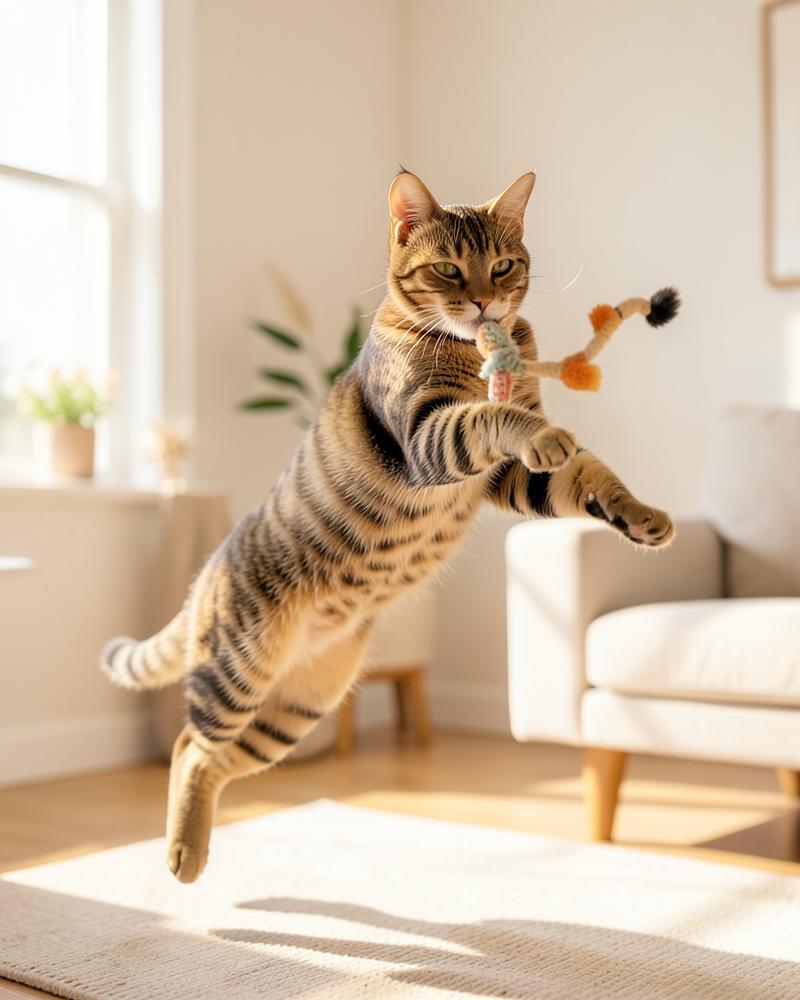
A wand toy works because it imitates a sequence — stalk, chase, pounce, catch. Skip the catch and the game feels unfinished; most cats will disengage and walk away.
Move the toy away from your cat rather than towards them, let it disappear behind furniture, and let them win at the end. Two short sessions a day beat one long one.
For dogs: add a problem to solve
Scatter a handful of food across a mat and let them find it. Hide a toy in another room and send them after it. Ask for a sit between throws so the game has structure.
The thinking is what does the work. A dog that has had to solve something settles differently afterwards than one that has only run.
Finish on purpose
End while they are still interested rather than when they are exhausted, and put the toy away between sessions. Toys that are always available stop being interesting; toys that appear are an event.
Rotate a small handful rather than owning many. Three toys in circulation will hold attention better than a basket of twelve.